
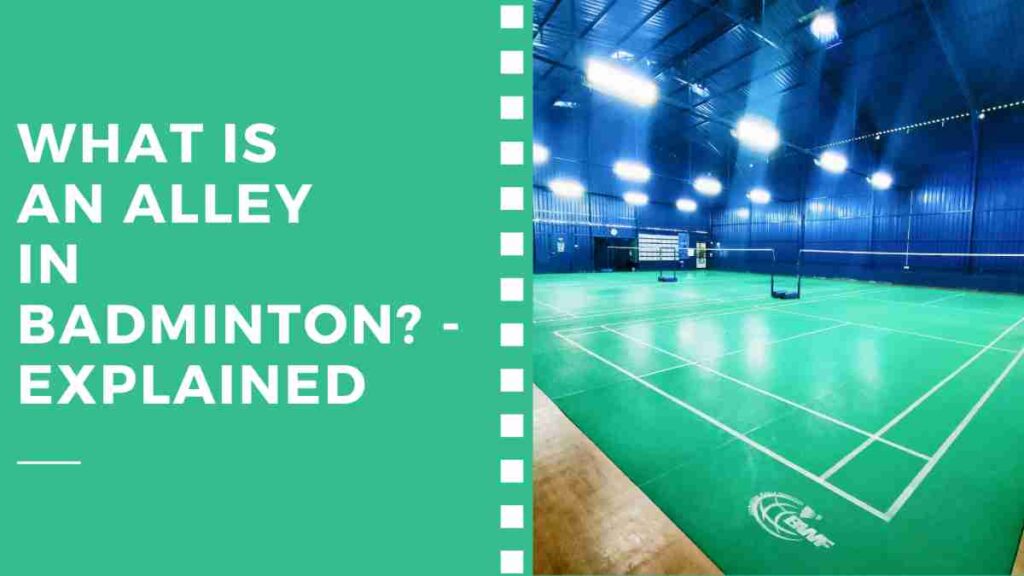
If you have noticed closely, a badminton court has several lines marked on the surface. Those lines decide the playing area of the badminton court, with alleys playing a crucial role during a game.
So what are these alleys? Where are they marked? And what purpose do they serve?
In this article, we’ll understand about alleys in badminton.
What is an alley in badminton?
An alley is an area between two lines marked on both sides and ends of a badminton court. There are two types of such passages – alleys and back alleys.
The alleys are on both sides of the court, running 13.40 metres parallel to the surface while measuring 0.46 metres in width. The back alleys, as the name suggests, are towards both ends of the court, measuring 6.1 metres in length and 0.76 metres in width.
What is the purpose of alleys in badminton?
The aim behind marking the alleys is pretty simple. The alleys help determine the legal playing area as per the laws of the sport during a badminton game.
If a singles game takes place on a court, then the side alleys fall outside of the playing area. That means a shuttler can’t go into that passage to serve or execute a shot. But, the back alleys make up the legal court, with shuttlers allowed to make long services in singles games.
In the doubles games, though, it’s the reverse of the singles playing area. The side alleys are part of the legal surface while the back alleys are out of the bounds for serving though the shuttlers can move into the area during a rally.
What happens if the shuttle falls into the alleys?
Since the side alleys are not part of the playing area, players need to be aware of their shot-making.
If you return the shuttle during a rally and it lands in the alley, you will concede a point for making a foul. Even while serving, if your serve strays into the alley it counts as a service fault, helping your opponent gain a point.
So it becomes crucial to have an idea about the surface you are playing on, especially the areas which are out of bounds of play.
Read Next | Tennis Grand Slam Tournaments – Explained