
Kabaddi is defined by three core scoring mechanisms: the raid, the do-or-die raid, and the bonus point. Every professional match is played by two teams of seven over two 20-minute halves and revolves around these rules. Understand them, and you understand the sport.
Breath.
Risk.
Return.
That’s kabaddi.
What Is a Raid in Kabaddi?
A raid is the fundamental attacking action in kabaddi. One player—the raider—crosses the midline into the opponent’s half, attempts to score by tagging defenders, and must return to his half in a single breath. Each defender legally touched equals one point, provided the raider returns safely.
This is the engine of the sport.
The raider must:
- Cross the midline.
- Chant “kabaddi” continuously to demonstrate one breath.
- Tag one or more defenders.
- Return to his half before being tackled.
If successful:
- 1 point per defender touched.
- Tagged defenders are declared out.
If tackled:
- Defense earns 1 point.
- Raider is out.
Simple structure.
Violent execution.
Elite raiders like Pardeep Narwal mastered advanced variations—like the dubki (a sudden duck under defenders)—but the rule remains unchanged: cross, score, survive.
Read: Kabaddi Positions Guide: Raider, Defender, and All-Rounder
What Is an Empty Raid?
An empty raid occurs when a raider enters the opponent’s half but fails to score any points and returns safely without being tackled. No points are awarded to either side.
Empty raids are legal. But they are limited.
And that limitation creates pressure.
What Is a Do-or-Die Raid?
A do-or-die raid occurs after a team completes two consecutive empty raids. On the third raid, the raider must score at least one point. If he fails to score—even if not tackled—he is automatically declared out, and the defending team earns one point.
This rule prevents passive play.
Sequence:
- Raid 1: Empty.
- Raid 2: Empty.
- Raid 3: Do-or-die.
On that third attempt:
- Raider must score.
- If he doesn’t, he is out automatically.
- Defense receives 1 point.
No negotiation.
The do-or-die raid changes body language. Defenders tighten formation. Raiders take sharper risks. Players like Anup Kumar built reputations on composure in these high-stakes moments.
This is the sport’s pressure valve.
What Is a Bonus Point in Kabaddi?
A bonus point is an additional scoring opportunity available when six or more defenders are on court. The raider earns 1 bonus point by crossing the designated bonus line with one foot while maintaining proper body position and returning safely, even without touching any defender.
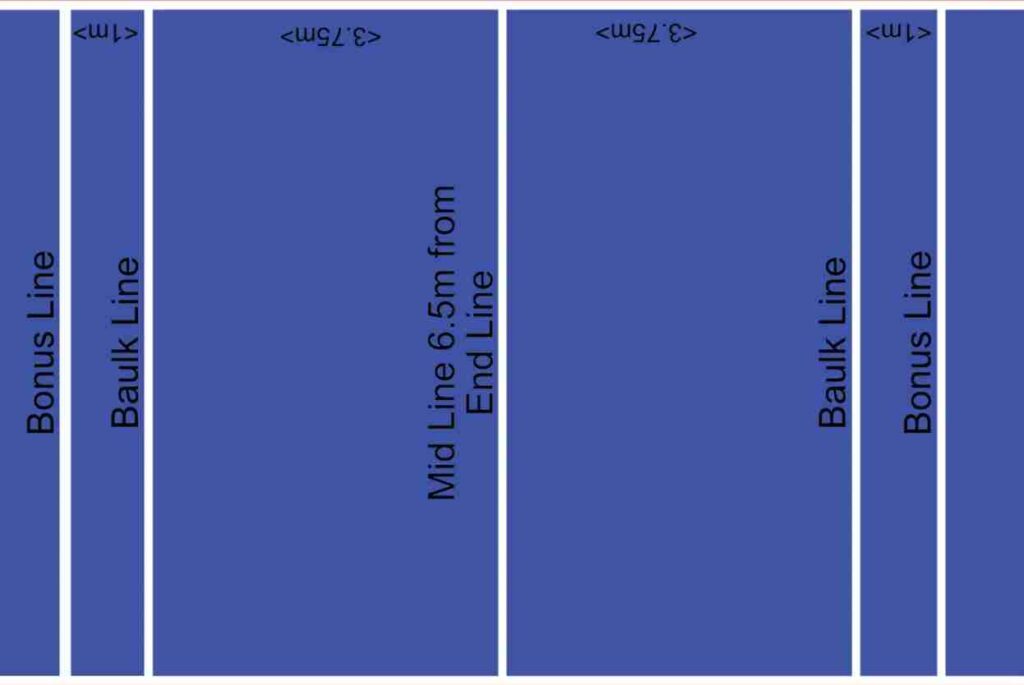
The bonus line sits parallel to the end line inside the defending half.
Conditions for a bonus:
- At least 6 defenders must be active.
- Raider must cross the bonus line with one foot grounded legally.
- The other foot must remain in the air or within legal bounds.
- Raider must return safely.
If successful:
- Raider earns 1 point.
- No defender is declared out.
It is precision over power.
Raiders such as Rahul Chaudhari often used the bonus to stretch defensive formations before launching aggressive attacks.
How Do Raid, Do-or-Die, and Bonus Points Interact?
These three rules form kabaddi’s scoring rhythm. Regular raids generate points through touches. Empty raids trigger do-or-die pressure. Bonus points reward calculated depth when defenders are fully present. Together, they create constant tactical tension.
Here’s the dynamic:
- Regular raid → Opportunity for multiple points.
- Two empty raids → Pressure builds.
- Do-or-die raid → Forced aggression.
- Six defenders active → Bonus available.
The defense must decide:
Guard the bonus line?
Or step forward and risk a touch?
Every raid is math. And psychology.
Key Terms Table
| Term | Definition |
|---|---|
| Raid | Offensive turn where a player enters opponent’s half to score |
| Raider | The attacking player during a raid |
| Empty Raid | Raid with no points scored |
| Do-or-Die Raid | Third consecutive raid requiring a point |
| Bonus Line | Line crossed to earn a bonus point |
| Bonus Point | 1 point scored without touching a defender (conditions apply) |
Core Strategy Around These Rules
- Avoid Early Empty Raids – Prevent do-or-die pressure.
- Use Bonus to Control Risk – Secure single points safely.
- Force Opponents Into Do-or-Die Situations – Increase defensive advantage.
- Track Defender Count – Bonus only activates with six or more.
- Balance Risk and Return – Multi-point raids vs. safe bonus plays.
The rules are simple.
The decisions are not.
Where Are These Rules Most Visible?
Modern kabaddi showcases these rules clearly in the Pro Kabaddi League, launched in 2014, where high-definition broadcasts and statistical graphics highlight raid types, do-or-die counts, and bonus attempts in real time.
Watch a match involving teams like the Patna Pirates, and you will see the rulebook come alive.
Every scoreboard tracks:
- Raid number
- Do-or-die status
- Bonus eligibility
Nothing is hidden.
How to Watch for These Rules as a Beginner
Focus on three signals: the raid count (to detect do-or-die), the number of defenders (to know if bonus is active), and the raider’s depth in the court (to judge risk). These cues reveal the tactical stakes instantly.
Count the raids.
Count the defenders.
Watch the feet near the bonus line.
Kabaddi is not random motion. It is structured confrontation governed by raid mechanics, do-or-die pressure, and bonus precision.
Understand those three rules—
And you understand the game.